Deer-Proof Your Garden
It’s that dreaded time of year for all gardeners: the annual rut. On top of eating up or trampling your garden, male deer notoriously rub their antlers against any young sapling they can to scrape off their antler velvet. This can be deadly to any tree planted in a garden or yard, especially if the bark is scraped off all around the tree, as it limits nutrient flow through the trunk to the upper branches. The best path to resisting deer is to make your yard as unappetizing as possible, both as a food source, resting place, and scratch spot. There are numerous ways to approach deer prevention, but we’ll split it into two categories: now and later.
Deer Prevention Now
Deer prevention “now” is what you should do at the start of the rut and through its completion. This upkeep begins around September and ends in early December. The most effective way to protect any yard is establishing a fence; one tall enough to prevent jumping is ideal. An 8-foot fence is standard for repelling deer and should be made of woven wire (Swift). You can use T-posts or tree stakes to hold in fencing, and for non-permanent fencing, chicken wire and other temporary garden fencing solutions. We likewise understand not everyone can afford or have a temporary fence in their yard, but building protective fence structures is quite affordable and simple. These structures are called plant plot utilization cages (PPUC for short), and you can learn how to build them here: click me. Install PPUC around newly planted perennials, shrubs, and less hardy trees. Similarly, if you really hate the look of temporary fencing, bark wrap or bark guard can wrap around young tree trunks. Our favourite is plastic bark guard, which is heavy-duty and won’t scrape off easily, unlike paper tree wrap. Likewise, plastic bark guard is ventilated due to its grid-like structure, allowing airflow to interact with the bark and prevent fungal infection.
Another popular temporary solution is applying repellents. These are created from substances deer find distasteful, like clove oil or garlic. Repellents can be spread as a liquid or a solid on or around plants. Repellents need consistent reapplication to be effective; rain and general moisture weaken effectiveness. Scent naturally weakens over time without water, too; reapplication can become a chore.
Deer Prevention Later
Deer prevention “later” means creating efficient, long-lasting practices for deer control. It includes building a permanent fence, planning a “deer-proof” garden, and habitat modification. Creating an anti-deer yard takes years of planning and dedication.
Deer try to avoid human activity, preferring silent meadows and forests. With our city ever expanding, silent spaces for rest can now be found in fence-less backyards, amongst ornamental grasses, on hillsides by roads, etc. Water can be accessed in storm drains, bird baths, ponds, parking lot puddles, creeks, etc. Food can be found in poorly maintained compost, gardens, medians, etc. Eliminate deer’s access to your gardens, ponds, and quiet corners. As mentioned earlier, the best defense against deer is establishing a fence. A permanent fence is perfect, as it requires less annual upkeep than temporary fencing solutions. Permanent fencing is undoubtedly expensive and requires permits and permissions for establishment. The next best solution to deer-proofing your yard or garden is to make it unhabitable to them.
You’re less likely to spot deer by roads or sidewalks unless they wish to cross or are grazing on plants near these locations. You’re also less likely to spot deer where dogs are frequent, like backyards or fenced front yards. Areas where people frequent the garden, whether near sidewalks or outdoor dining areas, are places deer try to avoid. These are ideal locations to plant tender plants that deer enjoy eating, as human presence will protect them (UME). Locations away from human activity should host deer-resistant plants (UME). Habitat modification includes making your yard an open space (if fencing isn’t an option), as deer like hiding spots to rest. Annual pruning and debris removal help tremendously, as you’re making a potential habitat unfamiliar and wide open. Avoid cluttering when designing landscapes and limit plants that grow over two feet tall.
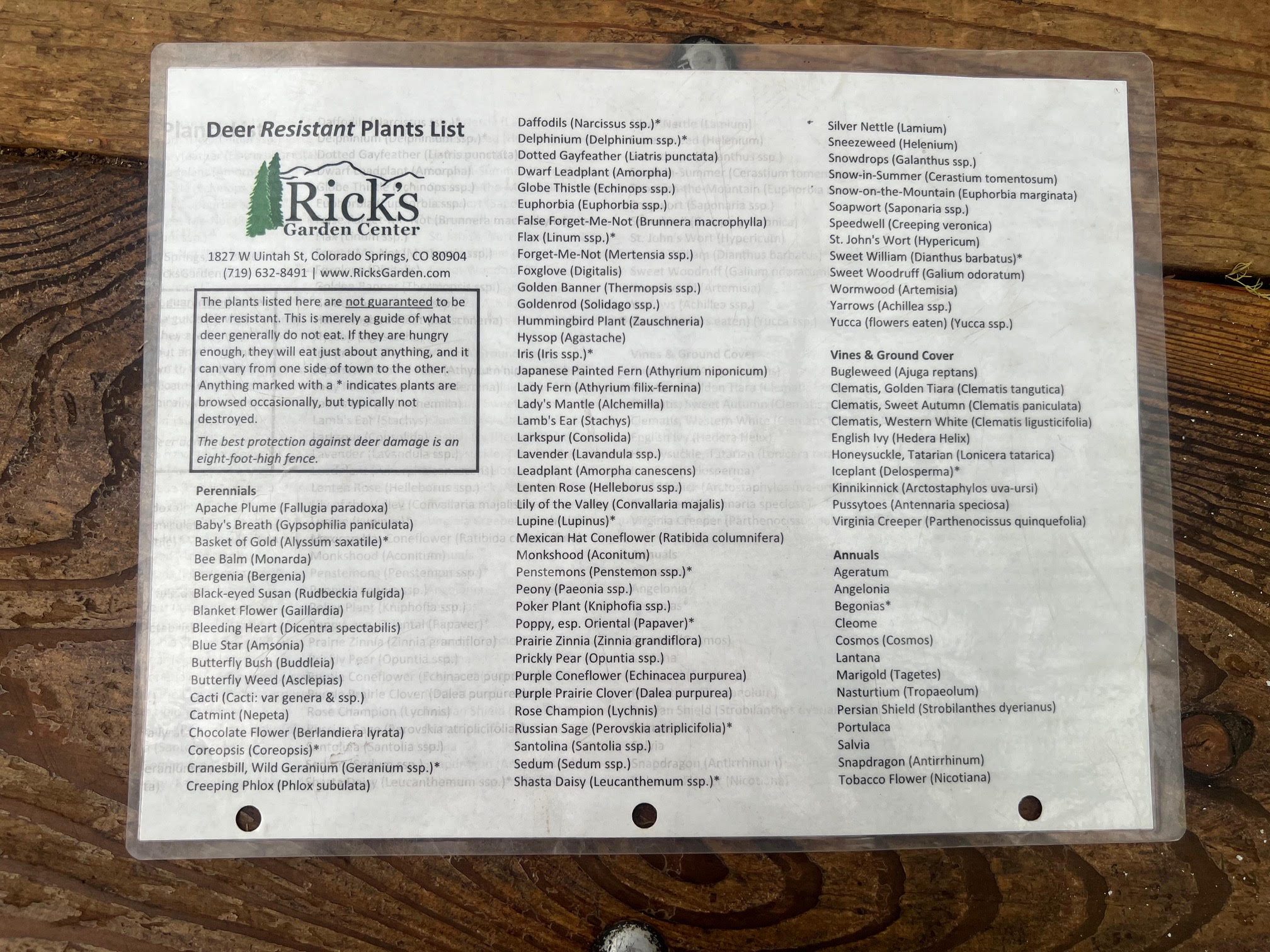
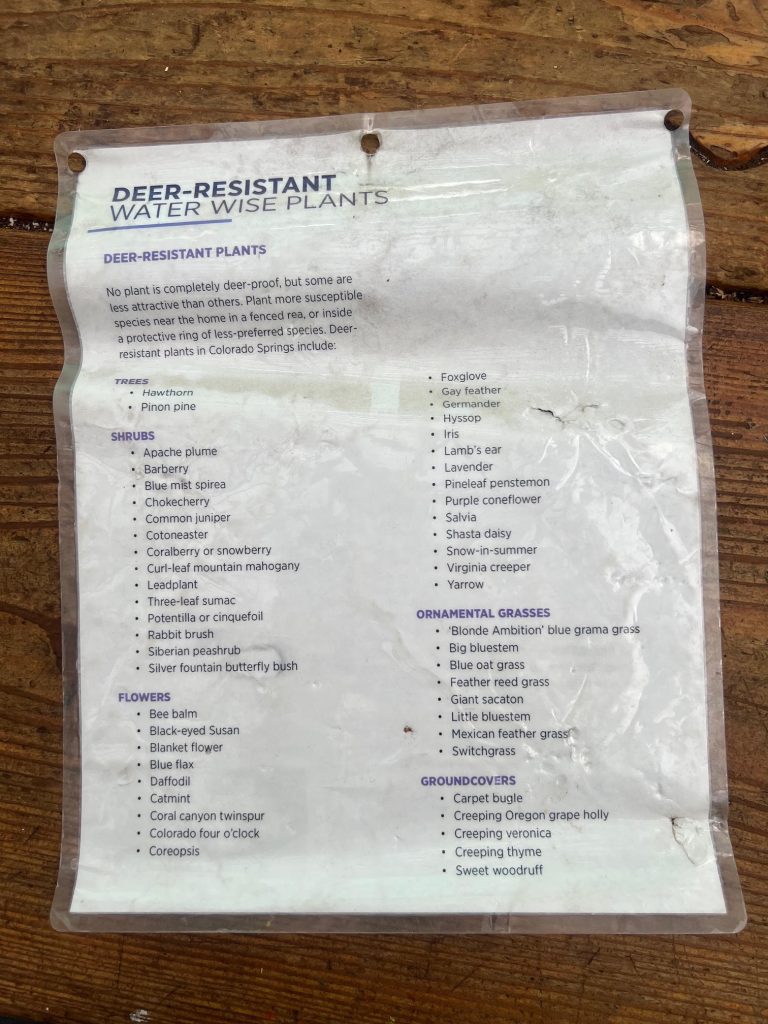
What plants to plant in a deer-proof garden? Sadly, there’s nothing truly deer-proof in the plant world, because if they’re hungry enough, deer will eat any vegetation. But deer typically avoid certain plants. Prickly, extra-fuzzy, and strong-tasting or smelling plants, like alliums, are all top contenders for deer-proof gardens. Poisonous plants also make great alternatives but can be harmful to humans and pets too. Here are a few lists for deer-resistant plants:

Does Deer Hazing Work?
A short-term solution: frightening deer away using loud sounds, animals, and other means can deter them from encroaching on your property. Motion-activated sprinklers, lights, or noisemakers are popular hazing methods; however, over time deer grow used to the sounds and will return to the garden to graze (UME). Dogs can be used as a hazing method, though deer will learn where they can and can’t go. Ultimately, hazing loses its effectiveness no matter what you do.
Distracting Deer With Food: Bad Idea
Some gardeners use food to distract deer from eating their plants. Others leave compost unattended and easily accessible. Regardless of intention, feeding wildlife in Colorado is illegal (CPW). It disrupts the grazing behavior and teaches deer to search human spaces for food, leading to car accidents or learned aggression (CPW). Feeding wildlife can also contribute to spreading two fatal diseases among deer and elk: acidosis and chronic wasting disease (CPW). Those found illegally feeding deer can face a $ 100 fine, which can be reported through Colorado Parks & Wildlife.
Even though deer are our wild neighbors, they can be destructive forces in the garden. There are numerous methods to deter them presently and in the future. Fencing, creating PPUC’s, and using plastic bark guards make great current solutions, while designing deer-proof gardens is a project for next spring. Repellents work generally but require lots of upkeep. Avoid buying hazing devices because deer grow accustomed to their presence. Do your part to report those who feed deer, as that only worsens their presence in human-populated spaces and leads to death by vehicle or disease.
Colorado Parks & Wildlife (CPW). “Feeding Wildlife.” Colorado Parks and Wildlife, 20 Dec. 2023, https://cpw.state.co.us/feeding-wildlifeAccessed 3 Sept. 2026.
Swift, C.E. “Preventing Deer Damage | Colorado State University Extension.” Colorado State University Office of Engagement and Extension, 2 June 2025, https://extension.colostate.edu/resource/preventing-deer-damage/. Accessed 28 Aug. 2026.
University of Minnesota Extension (UME). “How to Manage Deer Damage on Trees and Other Plants.” Umn.Edu, 2026, https://extension.umn.edu/garden-and-home/yard-and-garden/gardening-in-minnesota/white-tailed-deer-damage#habitat-modification-1880563. Accessed 31 Aug. 2026.
Back to Blog